
Domestic cleaning is the single most accessible tool for improving your mental health, physical wellbeing, and family harmony at home. Research from the British Psychological Society confirms that a clean, tidy environment reduces stress hormones, lifts mood, and strengthens relationships. Understanding how domestic cleaning improves home life goes beyond aesthetics. The science of household hygiene, as psychologists and health researchers now call it, shows that regular cleaning changes how you think, feel, and interact with the people you live with. The benefits are measurable, and they start sooner than most people expect.
How does domestic cleaning improve home life and mental health?
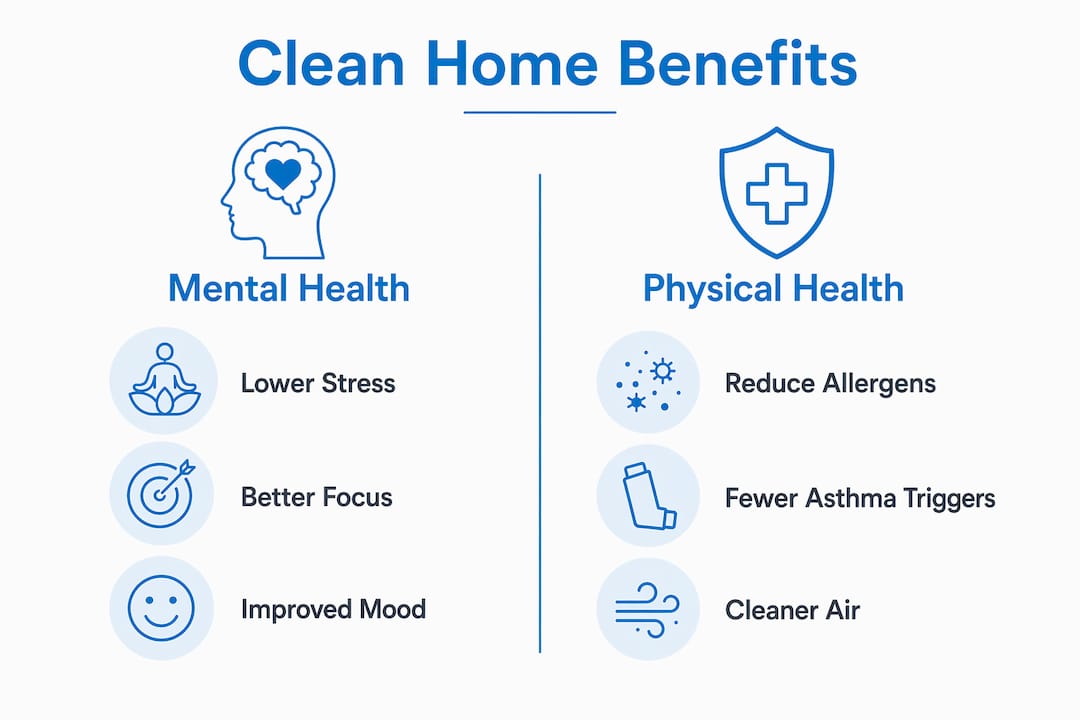
The mental health advantage of cleaning is rooted in psychology, not aesthetics. Penn State PRO Wellness defines the core mechanism clearly: cleaning gives people a sense of control over their environment, which directly reduces anxiety and depressive symptoms. That sense of control matters enormously when life feels unpredictable.
Psychologist Holly Schiff identifies three psychological drivers behind cleaning’s calming effect:
- Sense of control. Tidying a room restores order in a space you can directly influence, which lowers feelings of helplessness.
- Completion signals. Finishing a visible task, such as wiping down kitchen surfaces, triggers a reward response in the brain that regulates mood.
- Repetitive, predictable action. Vacuuming or mopping follows a clear pattern. That predictability calms the nervous system in a way that scrolling through a phone never does.
The British Psychological Society also links ongoing clutter to elevated cortisol levels. Cortisol is the body’s primary stress hormone. Higher cortisol over time worsens sleep, concentration, and emotional regulation. Cleaning breaks that cycle by removing the visual triggers that keep cortisol elevated.
Concentration improves noticeably in cleaner spaces. Families report fewer arguments when shared spaces are tidy, partly because mess itself becomes a source of resentment and blame. Removing the mess removes the friction.
Does a clean home reduce allergens and improve physical health?
A clean home directly reduces exposure to dust, pet dander, mould spores, and chemical fumes. All of these are asthma and allergy triggers that worsen respiratory health when left unmanaged. Research from Texas A&M University found that combining HEPA air purifiers with targeted cleaning education produced measurable improvements in adult asthma control. That finding matters because it shows cleaning alone is helpful, but a structured approach produces better results.
Johns Hopkins University reviewed the evidence on indoor allergen management and reached a nuanced conclusion. Targeted allergen reduction focusing on specific rooms and allergen sources outperforms general cleaning across the whole house. This means knowing where your allergens live is as important as how often you clean.
| Allergen Source | High-Risk Room | Recommended Action |
|---|---|---|
| Dust mites | Bedroom | Wash bedding at 60°C weekly |
| Pet dander | Living room, sofas | Vacuum with HEPA filter twice weekly |
| Mould spores | Bathroom, kitchen | Ventilate and wipe surfaces after use |
| Chemical fumes | Kitchen, utility room | Use low-VOC products and open windows |
The bedroom deserves the most attention for allergen control. Adults spend roughly a third of their lives there, and dust mite populations in mattresses and pillows are a primary driver of night-time allergy symptoms. Cleaning the bedroom thoroughly and consistently produces a disproportionate health return compared with time spent elsewhere.
How does a tidy home strengthen relationships and family dynamics?
A clean home reduces conflict. The British Psychological Society identifies mess-related disagreements as one of the most common sources of household friction. When shared spaces are consistently tidy, the number of arguments about who cleaned what, and when, drops significantly.
The relational benefits of a clean home extend beyond avoiding arguments:
- Reduced guilt and shame. Many people feel embarrassed about the state of their home and avoid inviting friends or family over. A cleaner home removes that barrier and reduces social isolation.
- Increased willingness to socialise. Fewer disagreements and higher willingness to host social visits are directly linked to cleaner living environments. Socialising at home strengthens relationships and supports mental health.
- Shared ownership builds cooperation. When family members each take responsibility for specific zones, the cleaning load feels fair. Fairness reduces resentment.
- Children benefit from structure. Consistent cleaning routines model organisation and responsibility. Children raised in structured home environments tend to develop stronger self-regulation skills.
The psychological benefit framework from the British Psychological Society makes a point worth repeating: the mental health advantage of cleaning is less about how the home looks and more about how it makes people feel. A home that feels manageable feels safe. A home that feels safe supports better relationships.
Shared cleaning routines also create a low-stakes opportunity for family cooperation. Assigning a teenager to vacuum the living room or asking a partner to handle the bathroom removes ambiguity. Clear ownership prevents the avoidance cycle where everyone assumes someone else will do it.
Looking for a Cleaning Service in Wokingham?
Request a no-obligation free quote from our DBS Checked, Insured Cleaning team. Same cleaner every visit. No contract required.
Request Your Free Quote →What domestic cleaning tips sustain a better home atmosphere?
Sustainable cleaning routines work because they are predictable and completable. The research is consistent on this point: micro-routines targeting high-visibility areas produce a repeated sense of control that sustains mental health benefits over time. The goal is not a perfect home. The goal is a manageable one.
Here is a practical framework for building a routine that sticks:
- Identify your three highest-impact zones. For most households, these are the kitchen, the main bathroom, and the living room. These are the spaces you use most and see most. Keeping them clean delivers the greatest visible return.
- Set a daily micro-task of five to ten minutes. Wipe the kitchen counter after dinner. Clear the coffee table before bed. These small completions accumulate into a consistently tidier home without requiring a dedicated cleaning day.
- Schedule a weekly deeper clean by room. Rotate through rooms so no single session feels overwhelming. One room per day across the working week covers the whole house without disrupting evenings or weekends.
- Match your cleaning method to your allergen profile. If someone in your household has asthma or allergies, prioritise the bedroom and use a vacuum with a HEPA filter. General cleaning helps but targeted cleaning protects health more effectively.
- Assign tasks by preference, not just fairness. Some people genuinely prefer vacuuming to washing up. Matching tasks to preferences reduces resistance and makes routines more likely to continue.
For families who find cleaning a source of conflict, the British Psychological Society recommends starting with shared ‘starter’ zones where responsibilities are clear and the task is easy to finish. A clean hallway or tidy kitchen table is a visible win that motivates the next step.
Key takeaways
A consistent domestic cleaning routine reduces stress, improves physical health, and strengthens family relationships by giving everyone a sense of control over their shared environment.
| Point | Details |
|---|---|
| Cleaning reduces stress hormones | Regular tidying lowers cortisol levels, improving mood, sleep, and concentration. |
| Targeted allergen control matters | Focus cleaning on bedrooms and use HEPA vacuums for the greatest respiratory health benefit. |
| Clean homes reduce household conflict | Tidy shared spaces remove a primary source of family arguments and social shame. |
| Micro-routines outperform occasional deep cleans | Daily five-minute tasks on high-visibility areas sustain mental health benefits consistently. |
| Shared task ownership prevents avoidance | Assigning clear responsibilities by zone reduces resentment and keeps routines going. |
Why I think we underestimate cleaning as a wellbeing tool
Most people treat cleaning as a chore to get through, not a practice to invest in. That framing is the problem. After years of working in and around domestic cleaning services, I have seen the same pattern repeatedly: households that maintain a consistent cleaning routine report calmer daily lives, fewer arguments, and a genuine sense of pride in their home. That is not a coincidence.
The research from the British Psychological Society and Penn State PRO Wellness confirms what I have observed directly. The benefit is not about having a show-home. It is about removing the low-level, background stress that a cluttered or dirty environment generates constantly. Most people do not notice that stress until it is gone.
The insight I find most underappreciated is the completion signal. Finishing a small cleaning task, even wiping one surface, genuinely regulates the nervous system. That is not motivational language. It is a documented physiological response. If you have ever felt inexplicably calmer after tidying a single drawer, that is exactly why.
My honest advice: stop waiting until the whole house needs attention. Start with one surface, one room, one task. The psychological return on a five-minute clean is disproportionate to the effort. Treat it as self-care, because the evidence says it is.
— Sam
Ready for a cleaner, calmer home in Wokingham or Bracknell?
If building and maintaining a cleaning routine feels like one more thing on an already full list, Cleaning Services Wokingham can take it off your plate entirely.
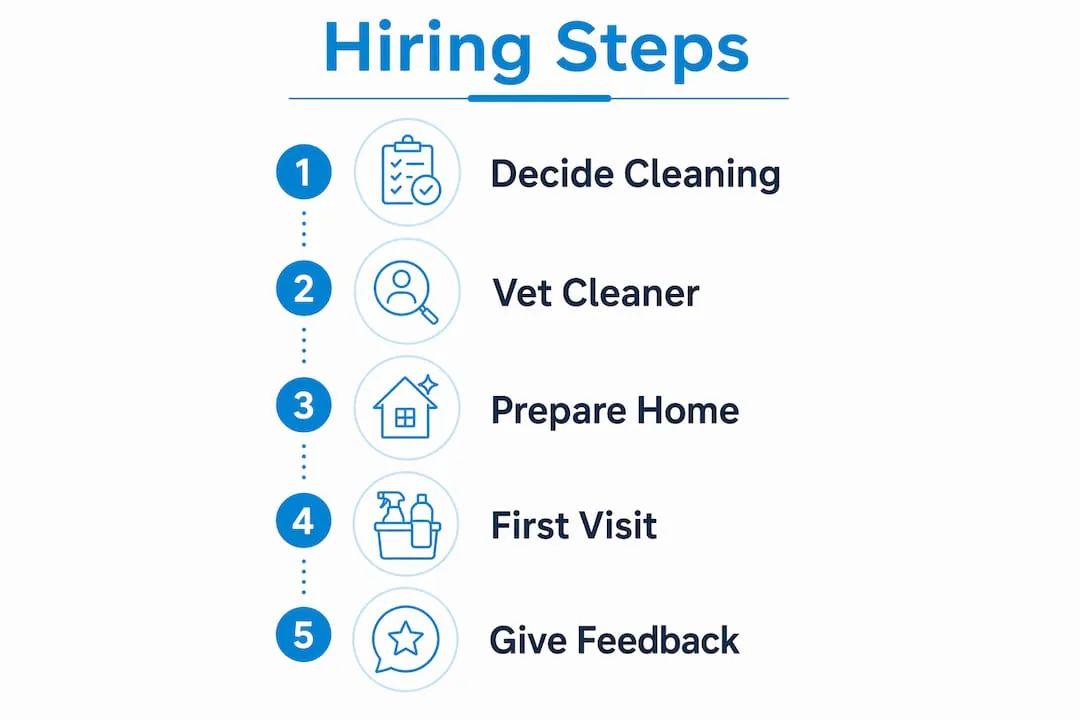
Cleaning Services Wokingham offers a fully managed, DBS Checked domestic cleaning service across Wokingham and Bracknell, with the same trusted cleaner assigned to your home every visit. That consistency means your cleaner learns your home, your preferences, and your priorities. The result is a reliably clean home without the stress of managing it yourself. Our service is backed by £2 million Insured Cleaning cover, so you can relax knowing your home is in safe hands. If you are ready to experience the wellbeing benefits of a consistently clean home, request a free quote today.
FAQ
Yes. Cleaning reduces stress by restoring a sense of control over your environment, which lowers cortisol and reduces anxiety and depressive symptoms. The British Psychological Society confirms that clutter raises stress hormones, while cleaning breaks that cycle.
Short daily tasks of five to ten minutes on high-visibility areas produce consistent psychological benefits. Micro-routines are more effective than infrequent deep cleans because they deliver repeated completion signals that regulate mood.
The bedroom is the highest priority, followed by the living room. Optimal allergen reduction requires focusing on dust hotspots with evidence-supported methods such as HEPA vacuuming and washing bedding at 60°C weekly.
A tidy home directly reduces conflict by removing mess-related friction and blame. The British Psychological Society links cleaner homes to fewer household disagreements and greater willingness to socialise, both of which strengthen family and social bonds.
Professional cleaning removes the mental load of managing household tasks, which is itself a significant source of stress for busy families. A consistent professional service maintains the environmental conditions that support better mood, sleep, and relationships without requiring you to find the time yourself.