
Hiring a domestic cleaner for the first time is defined by one thing above all else: clear expectations set before anyone crosses your threshold. Most first-time clients underestimate how much the success of a cleaning relationship depends on preparation, vetting, and communication rather than luck. The anxiety of inviting a stranger into your home is real, but it dissolves quickly when you know exactly what to look for, what to ask, and how to prepare. This guide walks you through every stage of the process, from choosing the right type of service to building a long-term relationship with a cleaner you can genuinely trust.
What type of cleaning should you choose for your first hire?
The two core options for first-time hiring are a one-off deep clean and a recurring maintenance service. Understanding the difference shapes everything that follows.
A one-off deep clean addresses accumulated grime, buildup, and neglected areas. It is the right choice when a property has not been professionally cleaned before, when you are moving in or out, or when you simply want a reset before committing to a regular schedule. Many clients start with a deep clean to establish a baseline, then transition to ongoing maintenance once the home is at the standard they want to maintain. This approach is sensible because it separates the heavy lifting from the lighter, more frequent upkeep.
Recurring maintenance cleaning, typically weekly or fortnightly, keeps a home at a consistent standard once that baseline exists. It is faster, more predictable in cost, and easier to schedule around a busy household. The cleaner learns your home over time, which means less briefing and fewer surprises on both sides.
| Option | Best suited to | Typical duration | Key consideration |
|---|---|---|---|
| One-off deep clean | New clients, post-move, reset | 3 to 6 hours | Higher upfront cost; sets the baseline |
| Recurring maintenance | Ongoing upkeep after deep clean | 2 to 3 hours | Builds familiarity and consistency |
| Combination start | Most first-time hirers | Deep clean, then regular | Most effective long-term approach |
Pro Tip: Start with a Deep Clean
If you are unsure which to choose, book a deep clean first. It gives the cleaner a clear picture of your home and gives you a chance to assess their work before committing to a regular arrangement.
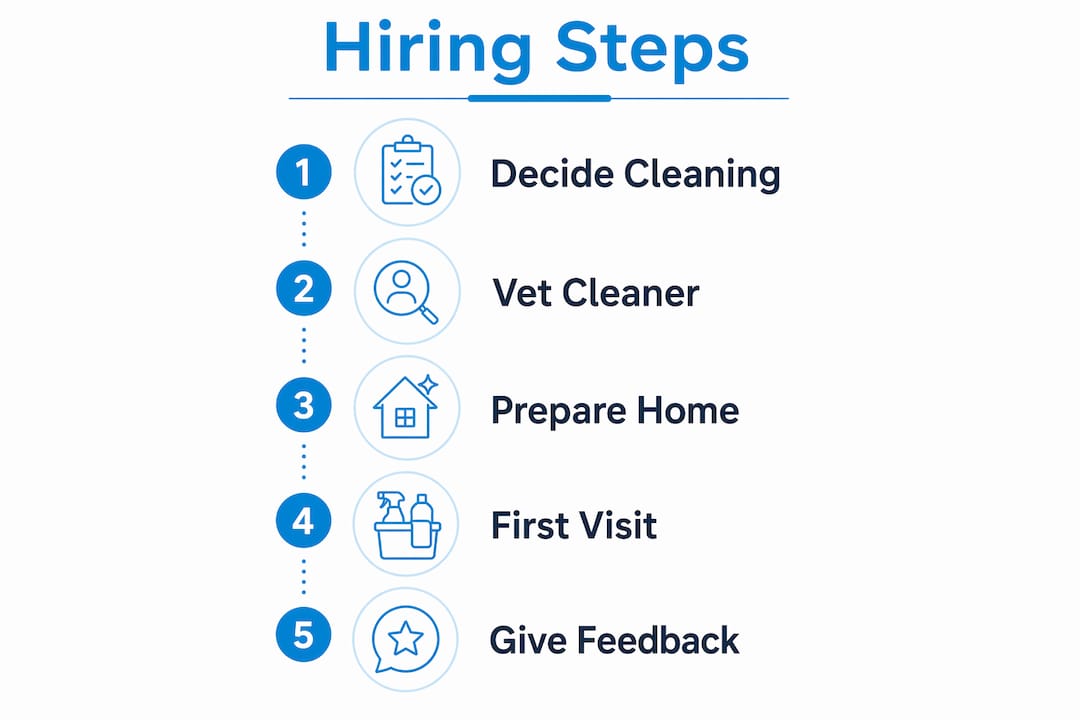
How do you vet and select a trustworthy domestic cleaner?
Vetting is the single most important step when hiring a cleaner for the first time. A cleaner will have unsupervised access to your home, your belongings, and potentially your family. Cutting corners here creates real risk.
The checklist below covers the non-negotiable steps before you confirm any booking:
- Insurance: Confirm liability insurance that covers property damage and third-party injury. Understand how damage claims are handled before anything goes wrong.
- Background checks: In the UK, Enhanced DBS checks are the standard for domestic staff, particularly in households with children or vulnerable adults. A DBS certificate alone is not sufficient. Pair it with identity verification and at least two references.
- References: Ask for contact details for previous clients and actually call them. A cleaner who hesitates to provide references is a red flag.
- Service scope: Verify insurance, background checks, references and clarify exactly what is included in the quoted price. Ambiguity here leads to disputes later.
- Contract or written agreement: Even a simple written summary of services, frequency, and pricing protects both parties.
The choice between an independent cleaner and a cleaning company also matters. Independent cleaners are often less expensive but leave you responsible for vetting, tax arrangements, and cover when they are unavailable. A managed cleaning company handles vetting, insurance, and continuity, which reduces your administrative burden considerably. For first-time clients especially, a managed service removes the guesswork.
Pro Tip: Go Beyond DBS Checks
DBS checks alone are insufficient for vetting domestic staff. Always supplement them with identity checks and personal references to get a complete picture.
How to prepare your home for the first cleaning appointment
Preparation before the first visit directly affects the quality of the clean and the efficiency of the cleaner's time. A little organisation on your part translates into better results and fewer misunderstandings.
Follow these steps before your cleaner arrives:
- Tidy lightly before they arrive. Clearing surfaces of clutter, picking up clothes, and putting away personal items allows the cleaner to focus on actual cleaning rather than organising. You are paying for cleaning time, not tidying time.
- Decide on access. Communicate your access method clearly in advance. Whether you leave a key in a secure location, share a door code, or plan to be home, ambiguity on this point is one of the most common sources of first-time hiring conflict.
- Write a priority map. A written priority list detailing your top areas and any sensitivities, such as fragile items, off-limit drawers, or product allergies, removes guesswork and reduces friction on the day.
- Conduct a walk-through. A structured walk-through at the start of the first appointment establishes priorities, highlights problem areas, and sets the tone for the relationship. Do not skip this step.
- Communicate product preferences. If you have specific cleaning products you want used, or products you want avoided due to allergies or surface sensitivities, say so clearly before the clean begins.
"Trust is built through combined steps of expectations, vetted credentials, references, and a clear initial walk-through rather than any single factor." — Care.com
Being present for the first appointment is strongly advisable. Client presence during initial cleans consistently improves communication and helps tailor the service to your household's specific needs. You do not need to hover, but being available to answer questions makes a measurable difference.
What should you expect on the first cleaning visit?
The first professional clean takes longer than subsequent visits. This is normal and expected. The cleaner is addressing accumulated buildup, learning the layout of your home, and calibrating their approach to your preferences. Initial cleaning addresses buildup and aligns to client preferences, with normalisation typically occurring by the second or third visit.
A standard clean generally covers the following areas:
| Area | Typically included | Common extras |
|---|---|---|
| Kitchen | Surfaces, hob, sink, floor | Oven interior, inside cupboards |
| Bathrooms | Toilet, basin, bath/shower, floor | Grout scrubbing, descaling |
| Living areas | Vacuuming, dusting reachable surfaces | Skirting boards, window interiors |
| Bedrooms | Vacuuming, surface dusting, bed change | Inside wardrobes, under furniture |
Standard cleaning covers floors, kitchen surfaces, bathrooms, reachable dusting, and bins; extras such as oven interiors, skirting boards, and internal windows are typically charged additionally. Clarifying this before the visit prevents the most common source of post-clean disappointment.
After the first visit, give specific feedback. Note what was done well and what you would like adjusted. A good cleaner welcomes this. Use the first few cleanings to calibrate standards and workflow rather than expecting perfection from the outset. This builds a sustainable working relationship rather than a series of one-off transactions.
Common mistakes first-timers make when hiring a cleaner
- Skipping insurance and background checks: This is the most consequential mistake. If a cleaner damages property or is injured in your home without adequate insurance, the financial and legal consequences fall on you.
- Assuming the scope without confirming it: Never assume a task is included. If you want the oven cleaned, say so explicitly and confirm the additional cost.
- Not preparing the home: Arriving to a cluttered home wastes paid cleaning time and frustrates both parties.
- Paying large sums upfront without a written agreement: A reputable cleaner or company will not ask for significant payment before work is completed. A simple written agreement protects you.
- Not being present for the initial visit: Absence during the first clean means missed opportunities to set priorities and answer questions that affect every subsequent visit.
- Ignoring feedback loops: If the first clean is not quite right and you say nothing, the cleaner has no way to improve. Silence is not a solution.
Pro Tip: Use a Calibration Period
Treat the first two or three cleans as a calibration period. Set clear expectations, give honest feedback after each visit, and adjust the scope as needed. The relationship improves significantly once both sides understand each other.
Key takeaways
Successful first-time hiring of a domestic cleaner depends on thorough vetting, clear preparation, and treating the first few visits as a calibration period rather than a final test.
| Point | Details |
|---|---|
| Start with a deep clean | Use a one-off deep clean to set a baseline before committing to a regular schedule. |
| Vet thoroughly | Check insurance, Enhanced DBS, identity verification, and at least two references before hiring. |
| Prepare your home | Write a priority map, confirm access arrangements, and conduct a walk-through on the first visit. |
| Be present initially | Attending the first clean improves communication and tailors the service to your household. |
| Give specific feedback | Calibrate standards over the first few visits rather than expecting perfection from day one. |
What I have learned from helping first-time clients get it right
After working with many families and professionals hiring a cleaner for the first time, the pattern I see most often is this: clients who invest ten minutes in preparation get dramatically better results than those who simply hand over a key and hope for the best.
The anxiety around inviting someone into your home is understandable. But in my experience, that anxiety shrinks almost entirely once you have met the cleaner, walked them through your priorities, and seen how they work. The first visit is not a test of the cleaner alone. It is a conversation. The households that treat it that way, asking questions, sharing preferences, and giving honest feedback afterwards, end up with a cleaning relationship that genuinely improves their quality of life.
One thing I would push back on is the idea that you should stay silent if the first clean is not quite what you expected. Many first-time clients feel awkward raising concerns. Do not. A professional cleaner wants to get it right. Specific, constructive feedback after visit one is the fastest route to a clean that consistently meets your standard. The clients who communicate openly are, without exception, the most satisfied ones six months in. You can read more about what to look for in a local service on our About Us page.
— Sam
How Cleaning Services Wokingham supports first-time clients in Wokingham and Bracknell
Starting with a service that already has vetting, insurance, and consistency built in removes the hardest parts of the process for first-time clients.
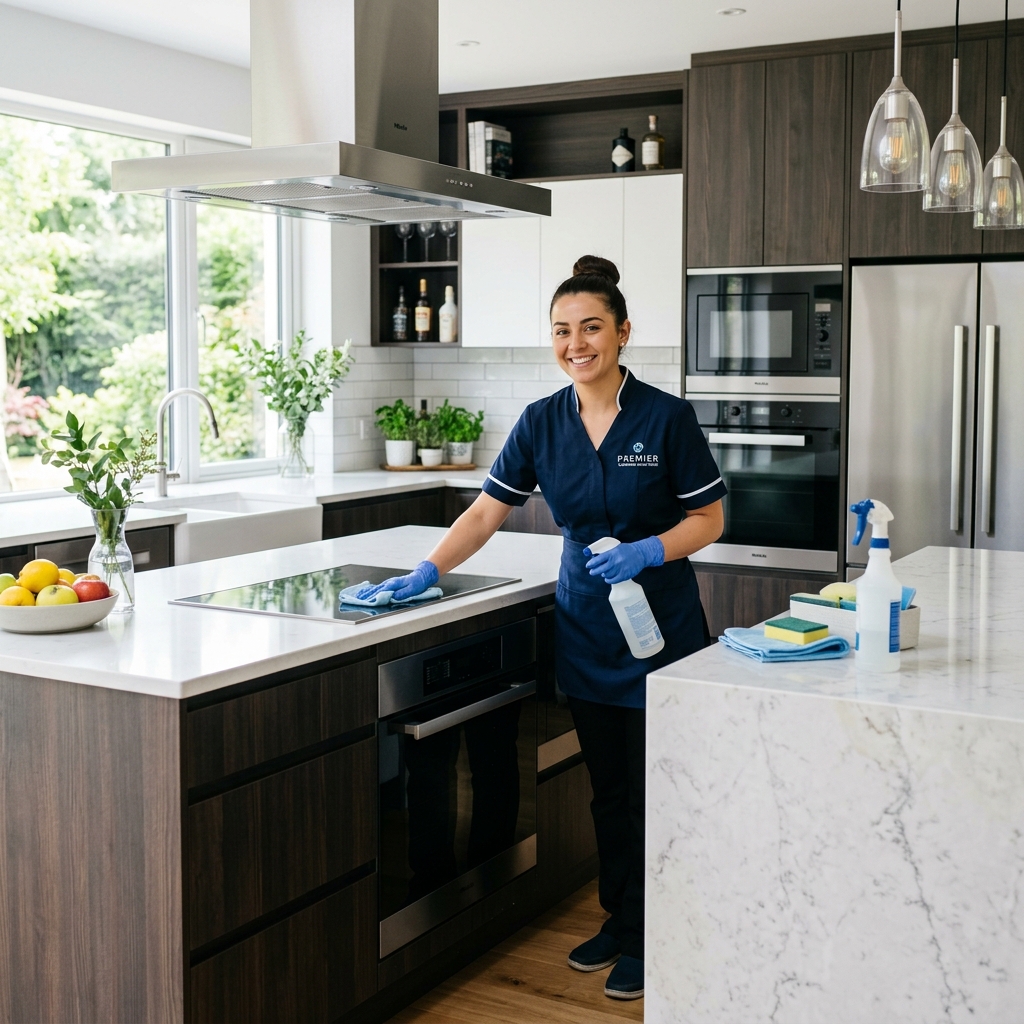
Cleaning Services Wokingham assigns the same cleaner to every visit, which means you build familiarity and trust rather than meeting a different person each week. Every cleaner is police-checked and backed by £2 million public liability insurance, so the vetting work is done for you. Our service is designed specifically for busy families and working professionals in Wokingham and Bracknell who want a reliable, high-standard clean without the stress of managing it themselves. If you are ready to take the first step, explore our weekly cleaning or fortnightly cleaning services, or get a free quote to discuss your needs directly.
FAQ
What does a first professional clean typically include?
A standard first clean covers kitchen surfaces, bathrooms, floors, reachable dusting, and bins. Tasks such as oven interiors, skirting boards, and internal windows are usually charged as extras, so confirm the scope in writing before the visit.
Do I need to be home during the first cleaning appointment?
Being present for at least the first visit is strongly advisable. It allows you to conduct a walk-through, answer questions, and observe the cleaner's approach, all of which improve the quality and consistency of every subsequent clean.
What background checks should I ask for in the UK?
Ask for an Enhanced DBS certificate alongside identity verification and at least two personal references. DBS checks alone do not provide a complete vetting picture for domestic staff working unsupervised in your home.
How long does the first cleaning visit take?
The first visit takes longer than regular maintenance cleans because it addresses accumulated buildup and establishes a baseline. Expect three to six hours depending on the size and condition of the property, with subsequent visits typically taking two to three hours.
Should I tip or pay upfront for domestic cleaning?
Avoid paying large amounts upfront without a written agreement. Reputable services invoice after work is completed or operate on a regular payment schedule. Tipping is entirely discretionary and appreciated but never expected.
Need Extra Help?
Maintaining a clean, healthy home requires consistent effort. If your busy schedule is getting in the way, our vetted cleaners are here to help. We offer regular weekly or fortnightly cleaning schedules designed to keep your home healthy and sparkling.
Enquire About Regular Cleaning